People and partners
Our collaborative network of people and partners enables progress in GI cancer research.


Our membership
Our purpose lies in bringing together a diverse network of brilliant people to address unmet needs in GI cancer research.
In 2025, we welcomed 130 new members to a total of 1,997 members from Australia and Aotearoa New Zealand.
Our members include medical specialists, scientists, nurses, allied health professionals and health community members.
Our members have access to research and educational opportunities, including:
- quality educational and networking events,
- multiple research development pathways,
- access to expert development support for new trial concepts,
- funding opportunities,
- opportunities for recognition at our annual awards,
- study co-chair positions for early and mid-career researchers, and
- regular expressions of interest to join committees.

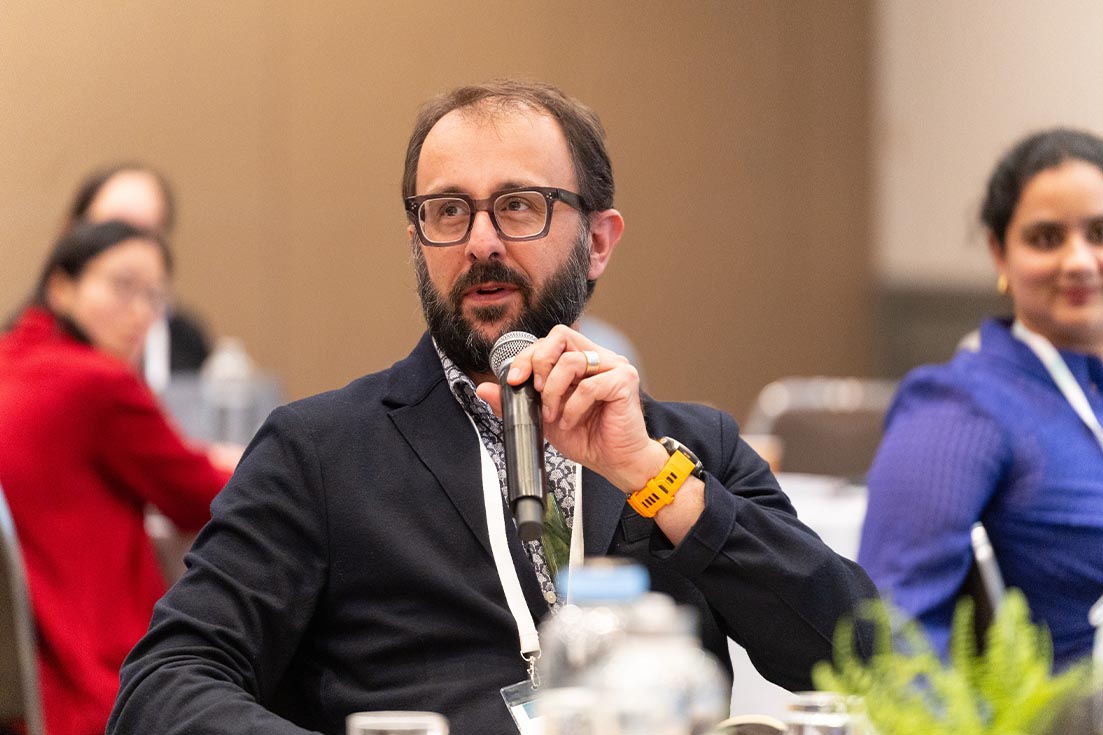
Our committees are comprised of 155 dedicated members.
Members who actively contribute as committee members are the driving force behind conducting research infused with innovation, passion and goodwill. They also help ensure that we have robust and transparent processes for research development and funding.
- Research Executive Committee
- Upper GI, HPB and Lower GI Working Parties
- Community Advisory Panel
- Translational Research Committee
- Emerald Clinical-Secretariat Supported Independent Data Safety and Monitoring Committee
- CTC-Secretariat Supported Independent Data Safety and Monitoring Committee
- International Development Committee
- Aotearoa New Zealand Committee
- Annual Scientific Meeting Executive Committee and Subcommittees in Medical Oncology, Radiation Oncology and Radiology, Study Coordinators and Cancer Nurses, Surgery and Translational Research
- Scientific Advisory Committee (retired August 2025)
- Research Operations Committee (retired August 2025)
- Grants Committee (retired August 2025)
Lived experiences of GI cancer continue to inform our research
Established in 2008, the Community Advisory Panel (CAP) makes a tangible impact on new research for people with GI cancer, ensuring that the research conducted meets the needs of those it is for. This volunteer group provides advice on general research directions and priorities from the perspective of their lived experience with GI cancer, as well as identifying unmet needs in the community.
From our Community Advisory Panel Chair,
Jeff Cuff
The Community Advisory Panel (CAP) has continued to play a vital role in shaping the direction and quality of GI Cancer Trials’ research throughout 2025. As the organisation evolved - launching a new name, a new strategy, and marking the milestone of our 10,000th trial participant - the CAP remained at the heart of this work, ensuring that every trial we develop is grounded in the needs and priorities of people with GI cancer.
The 2025 period proved to be a busy year with lots of exciting reviews and changes within the review process, which was captured in upgrades to our terms of reference.
In May, we farewelled John Paduano who stepped down from the CAP. Over the past three years, I have been privileged to speak at an event organised by John to raise money for GI and brain cancer research - an effort that has raised around $30,000 in that time. On behalf of everyone at GI Cancer Trials, I would like to thank John for his great contribution during this time on the CAP. Thank you!
To help meet the growing profile and role of the CAP, it was wonderful to welcome five new members to the team in 2025: Gemma Farquhar, Katrina Kendall, Melissa Bodenham, Nick Verry and Nicole Kroesche.
The growth of the CAP panel to 15 members is an indication of the importance of the group’s input and the intention to see it embedded in all studies from the early concept and design phase. Each new member brings unique insight from their lived experience with GI cancer, and we are grateful to have them join this committed group.
The CAP panel holds a monthly meeting which continues to grow in support - not just for the panel but for the extended team. Guest speakers at these meetings have been tremendous, covering a range of topics including genomics, translational research, nutrition and the cancer patient, biomarkers in GI cancer, and the impact of the microbiome in GI cancers. This meeting also serves as a forum to discuss new policies and procedures, with participation that may include GI Cancer Trials staff.
Throughout the year, our CAP members provided detailed feedback on participant information and consent forms, reviewed lay summaries of trial results to ensure they were accessible and meaningful to patients and families, and offered advice on new trial concepts at various stages of development. The panel was part of 12 grant reviews and 5 new concept reviews, spanning both Upper and Lower GI working parties. This work, carried out with care and generosity by people who give their time entirely voluntarily, ensures that our research is not only scientifically robust but also relevant, respectful and accessible to the people it is designed to help.
I am grateful to every member of the CAP for their contribution, and to our Deputy Chair, Jodie Collins, for their ongoing support and leadership within the panel.
Trials and concepts reviewed by the CAP in 2025:
1. Trial results lay summaries:
- SPAR Trial Version 1 Results Lay Summary
- SPAR Trial Version 2 Results Lay Summary
- NABNEC Trial Results Lay Summary
- INTEGRATE IIb Trial Results Lay Summary
2. Concepts:
- iGOLSTA [Neo-GOLSTA] (March UGIWP)
- RBAC (March LGIWP)
- DYNAMIC-IV (March LGIWP)
- DYNAMIC-IV (May Combined LGIWP/CAP/TRC)
- ENRICH (June UGIWP)
3. Participant Information and Consent Form (PICF) reviews:
- PemOla PICF
- BATTMAN PICF
4. Early Concept Development
- CIRCADIAN (Sep/Oct 2025)
I also want to take a moment to acknowledge Professor Cheri Ostroff, who stepped down from the CAP earlier in the year. Sadly, she passed away only a few weeks later. Cheri was a deeply valued member of our panel, and her contributions to our work, and to the broader GI cancer community, will not be forgotten.
As we look ahead to 2026, the CAP remains committed to advocating for people with GI cancer and to ensuring that the trials we develop reflect their needs and priorities.
As this is my final report as Chair, I want to take a moment to reflect on what has been an extraordinary journey. I have reached my tenure within the group and will be stepping down from the CAP, as both a member and as Chair, in May 2026.
It has been an honour and a privilege to be part of this group. I am proud of what the CAP has achieved and of the impact it continues to have on study design and, ultimately, on patient outcomes.
I wish the panel every success as it goes from strength to strength, and I have no doubt that the work you do will continue to make a real difference to people with GI cancer.

Community Advisory Panel Chair
Our EDI commitment
We work towards creating more equitable research for people with GI cancer.
Since launching our Equity, Diversity and Inclusion Statement in November 2023, we have made significant progress towards our goals, with the principle of ‘demonstrated action and continual improvement’ guiding the way.
In 2025, our focus shifted from planning to practice. With the launch of our 2025–2030 Strategy, which embeds equity, diversity and inclusion throughout our strategic priorities, we concentrated on implementing and embedding the changes initiated in 2024.
Membership
- Membership growth and representation: Continued growth in membership, including the expansion of Annual Scientific Meeting (ASM) subcommittees to 18 members, supporting broader representation and participation.
- New committee: The Hepato-Pancreato-Biliary (HPB) Committee was established to strengthen specialty representation and leadership pathways.
- Collaboration with AHLOs: Ongoing collaboration with Aboriginal Health Liaison Officers (AHLOs) to support culturally informed engagement and research practices.
Research
- Inclusive trial design in practice: The STOPNET trial is a great example of how the EDI activities introduced in 2024 are being applied. The trial was designed as a teletrial to enable participation from regional, rural and remote areas. Travel support budget was included from the outset to aid participants, and the database was set up to capture ethnicity and location data.
- STOPNET case study: A regional patient received funding to travel to and stay for two nights in a major city to access specialised treatment available at only six hospitals nationwide. We then worked with the regional hospital closest to the patient to establish the trial locally as a teletrial, enabling all follow-up visits to be completed close to home. We coordinated logistics and processes between the two hospitals, supporting both the patient journey and the hospitals involved, despite no existing formal processes between them.
- 2025 Annual Scientific Meeting (ASM): Our 27th ASM opened with an Indigenous-designed and led session on “Collaborations with Communities”. Delegate feedback included: “The very public inclusion of collaboration with the Aboriginal and Torres Strait Islander peoples gave great insight.” Since improving our data capture processes, more trials are now reporting on EDI aspects of recruitment. We also financially supported 20 early career researchers, study coordinators, and nurses to attend the meeting.
Processes
- Seedpod of Yarns: This First Nations-led video series was launched in 2025, directed by Madison Shakespeare, Gadigal Traditional Custodian and former Community Advisory Panel member. Over the course of a year, Madison travelled across Australia, yarning with Aboriginal and Torres Strait Islander people about what a self-determined cancer journey could look like, with a focus on GI cancer. The series shares honest, culturally specific insights that will strengthen relationships with community and support member education in culturally safe care. View the series
- A campaign promoting the Seedpod of Yarns series and the accompanying patient brochure ran during NAIDOC Week. The brochures were enthusiastically received by members and partners, requiring a second print run within weeks.
- Public acknowledgements: An Acknowledgement of Country and an EDI statement were added to the website as a visible demonstration of respect for Aboriginal and Torres Strait Islander peoples and our commitment to equity, diversity and inclusion.
- Website accessibility improvements: Styling and colour updates improved readability and navigation of the website, to meet accessibility standards of WCAG 2.0 level AA.
- Clearer, more inclusive website content: To support equitable access to information and improve health literacy, we strengthened the clarity, relevance and tone of key website content. This included redeveloping the Frequently Asked Questions page into a single, easy-to-navigate page written in warmer, more accessible language for lay audiences. We also developed an evergreen cancer stories library, creating a culturally respectful and supportive space where people affected by GI cancer can see their experiences reflected, preserved and shared in an accessible online environment.
- New partnership: We partnered with the Ramsay Hospital Research Foundation to mutually enhance the access to, resourcing for and delivery of clinical research opportunities.
Workplace
- Inclusion training: The SBS Inclusion Program, introduced in 2024, continued in 2025, further strengthening staff awareness and capability in embracing diversity and contributing to a safe and inclusive workplace.
- Flexible work practices: While many organisations have implemented mandatory return-to-office policies, we continue to support a hybrid working model, enabling employees to balance work responsibilities with personal commitments.
Our partners
Building partnerships that put patients first
A new partnership was launched in 2025 with the Ramsay Hospital Research Foundation. The collaboration is founded on a shared commitment to improve patient outcomes through high-quality, patient-centred clinical research clinical research and will seek to mutually enhance the access to, resourcing for and conduct of research opportunities.
We continue to work closely with Gut Cancer Foundation New Zealand and would like to acknowledge them for funding access to our trials across several sites in Aotearoa New Zealand.
As part of the Australian Pancreatic Cancer Alliance, we worked alongside #PurpleOurWorld, Pancare Foundation, PanKind, the Australian Pancreatic Cancer Foundation, Dare to Hope, Garvan Institute of Medical Research, Jreissati Pancreatic Centre and Team Lopez Foundation for improved pancreatic cancer awareness and advocacy.
The Hunter Medical Research Institute (HMRI), Cancer Research Economics Support Team (CREST) and Cancer Quality of Life Expert Service Team (CQUEST), from the University of Technology Sydney, remain crucial partners as we increasingly implement value-adding quality of life and economic measures in our research.
Building global connections to accelerate GI cancer research
GI cancers are a global issue, necessitating a global approach to developing new clinical trials.
To extend the reach of our trials beyond Australia and Aotearoa New Zealand, we continue to build collaborative relationships with international trials groups, like Antwerp University Hospital, Anticancer Fund, the Canadian Cancer Trials Group, Cancer Trials Ireland, Cambridge University Hospitals NHS Foundation Trust, Frankfurter Institut für Klinische Krebsforschung, National Cancer Center Japan, Royal Marsden Hospital, University of Glasgow, University of Southampton, and Tata Memorial Hospital.
GI Cancer Trials was well represented at the leading oncological conferences throughout the year with a record number of presentations in a year for the group, including four trials on show at ASCO and six at ESMO. GI Cancer Trials leaders met with industry colleagues and international trial groups to develop new collaborations and to strengthen existing partnerships.
Our global footprint continues to expand with 304 sites worldwide:
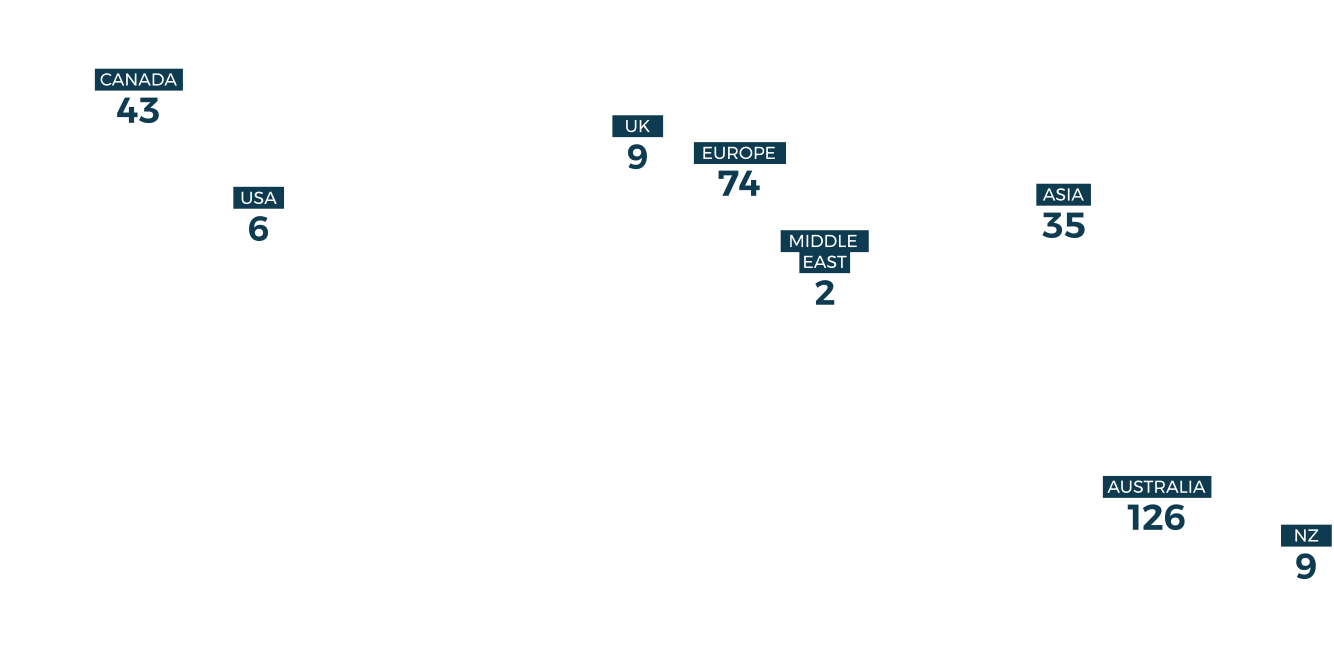

Middle East
2
USA
6
New Zealand
9
UK
9
Asia
35
Canada
43
Europe
74
Australia
126
*Numbers are collective numbers since 1991 and accurate as of 31 December 2025.
Collaborating with CommNETs
Formed in 2015, the Commonwealth Neuroendocrine Tumour research collaborative (CommNETs) brings together researchers, clinicians and community members from Australia, Aotearoa New Zealand and Canada under one umbrella to encourage the development of clinical trials in neuroendocrine cancers.
The first trial under the CommNETs banner, STOPNET, is currently recruiting patients across Australia and Canada.
A national network of expert coordinating centres








Thank you to our Corporate Partners
Corporate support enables our team and members to drive new research and advance better treatment options for the 37,567 Australians diagnosed with GI cancer each year.
We thank AstraZeneca, Servier, Taiho and Takeda for their support in 2025.




Our Board of Directors
In 2025, we welcomed Daniel Pittorino to our Board of Directors. Daniel brings valuable expertise and fresh perspective, and we look forward to his contribution in the years ahead. We also farewelled Liz Thorp, who stepped down mid-year. Liz gave generously of her time and insight during her tenure, and we are grateful for her commitment to our organisation.
Thank you to our Directors for their service in 2025.
Professor Lorraine Chantrill
Chair
Dr Anne O’Donnell
Deputy Chair
Professor Robert Ramsay
Company Secretary
Grant Mundell
Treasurer
Professor Stephen Ackland
Christine Bishop
Associate Professor Manju Chandrasegaram
Ebony Gaylor
Professor Chris Karapetis
Dr Mark Lee
Geoff Parnell
Daniel Pittorino
appointed November 2025
Liz Thorp
retired May 2025
Our staff
Our team continues to grow with the expansion of our in-house trial coordinating centre and growth of our member events. To support this growth and our new strategy, we welcomed four new team members in 2025: Alexia, Atefeh, Gemma, and Jamila.