Research
Our research delivers innovative, practice-changing clinical trials that improve outcomes for people with GI cancer.


2025 research highlights
From our Research Executive Committee Chair,
Professor Chris Karapetis
In 2025, we strengthened our research leadership, made it easier for members to bring forward new ideas, expanded our global research impact, and launched a new strategic direction to support future growth.
Importantly, these changes were shaped by insights from our members, partners and staff, informed through our strategic planning workshop in March and shared commitment to advancing GI cancer research.
The Research Executive Committee (REC) was established in 2025, following the merger of the Research Operations and Scientific Advisory Committees. This change was made to strengthen how we identify and prioritise new trial ideas. The REC brings together leadership from the prior Scientific Advisory Committee, our Upper GI and Lower GI Working Parties, alongside the International Development Committee, Translational Research Committee, Community Advisory Panel, and Aotearoa New Zealand Committee. This multidisciplinary approach ensures our research is guided by scientific excellence, lived experience insights, and international perspectives.
A major focus in 2025 was making it easier for members to contribute new research ideas. As part of our 2025–2030 strategy, we introduced a streamlined research development pathway designed to reduce duplication and focus effort on studies with the greatest potential impact.
Investigators can now submit research concepts through a simple form on our website, providing an accessible entry point for both existing members and those new to GI Cancer Trials. The REC reviews submissions monthly, prioritising the most promising ideas early and providing constructive feedback to support further development. This approach enables innovative ideas to progress more efficiently and ensures our research portfolio reflects the needs of patients and the clinical community.
Our research continued to influence global clinical practice in 2025, with multiple trials presented at major international forums and published in leading journals. DYNAMIC-III was presented in an Oral Abstract Session, and STOPNET and NEO-IMPACT as poster presentations at the ASCO Annual Meeting, with additional studies featured across ASCO GI and other sessions. Results from DYNAMIC-III and INTEGRATE IIb were featured at the ESMO Congress, while preliminary ASCEND data was shared at the ESMO GI Congress.
Eight trials were published during the year, including a landmark publication from DYNAMIC-III in Nature Medicine, MONARCC, ALT-GIST, ASCOLT, INTEGRATE and INTEGRATE IIa, RoLaCaRT-1 and the practice-changing findings from the TOPGEAR trial continue to shape global treatment discussions.
In 2025, we also introduced our new organisational brand, GI Cancer Trials. This rebrand clarifies our purpose and reinforces our leadership in collaborative clinical research. By increasing our visibility among patients, clinicians, partners and funders, the new identity will help us attract new research ideas and help fund more trials that improve patient outcomes.
Finally, I would like to acknowledge Sandra Bahamad who was appointed Head of Research in mid-2025. Having led the establishment of our coordinating centre, and with 20 years of experience in clinical trial management, Sandra is well-placed to lead the continued growth of our research portfolio.
The establishment of the REC, improvements to our research framework, and growing global impact of our trials, position GI Cancer Trials strongly for the future. Together, these initiatives ensure we remain focused on enabling innovative research and delivering meaningful change for people affected by GI cancer.

Research Executive Committee Chair
Our research impact to date
Since 1991, our work has led to*:

research studies developed and led to address GI cancer

invested in our research

patients given access to new treatment options in our trials

articles published in peer-reviewed journals from our research

presentations delivered on our research at conferences across the world
*Numbers are collective numbers since 1991 and accurate as of 31 December 2025. Studies counted include: clinical trials which are in start-up, open, in follow-up or completed; endorsed studies; and translational research studies.
Four new trials opened in 2025
- IMPERIAL is exploring whether a combination of FDG-PET scans, MRI scans, and blood tests, conducted two weeks into treatment for anal cancer, can predict treatment success or failure six months after starting chemoradiotherapy.
- Neo-POLEM is an international colorectal cancer trial led by Dr Tony Dhillon (Royal Surrey, UK) in collaboration with the Cancer Research UK Southampton Clinical Trials Unit, and under the leadership of Professor Tim Price in Australia. This groundbreaking study is exploring the efficacy of PD1-Vaxx, a type of immunotherapy which has shown promising preliminary results in lung cancer, for patients with a subtype of colorectal cancer called defective mismatch repair.
"To lead this trial in Australia is exciting. The results have the potential to make changes to current international treatment protocols," says Professor Price. - MR STAR, led by Dr Trang Pham, is one of the first studies globally to assess whether MRI-guided stereotactic radiotherapy is more effective than standard CT-guided stereotactic radiotherapy in controlling oligometastatic abdominal cancers. While the theoretical benefits of MRI-guided radiotherapy are known, this community-funded trial is testing innovative new technology to explore whether these translate into improved patient outcomes.
- PemOla, a phase II trial originating at Cambridge University Hospitals NHS Foundation Trust and led locally by Dr Daniel Croagh, uses a precision medicine approach to explore whether combining an immunotherapy drug and a PARP inhibitor in patients whose tumours have a high number of mutations could improve survival outcomes for patients with metastatic pancreatic adenocarcinoma. With pancreatic cancer having the lowest survival rate of all major cancers in Australia – just 13% at five years – this research is urgently needed. PemOla is generously funded by a Tour de Cure grant, a PanKind Research Grant, an Epworth Medical Foundation Grant and GI Cancer Trials philanthropy.
“I can’t thank the community enough,” says Dr Daniel Croagh, Australian Study Chair. “PemOla could change the future of treatment for patients who currently have no options left, if proven beneficial.”

MR STAR Clinical Trial

PemOla Clinical Trial
Trial spotlight
TOPGEAR trial findings change international guidelines for stomach cancer
The international TOPGEAR trial has delivered practice-changing evidence for the treatment of resectable stomach cancer. The study tested whether adding preoperative chemoradiotherapy to standard perioperative chemotherapy would improve outcomes for patients.
Across 574 participants in 15 countries, the trial found that although radiotherapy improved pathological response rates, it did not improve overall survival. This is a significant finding for centres, particularly in the United States, where preoperative chemoradiotherapy has been routinely used for gastric and gastro-oesophageal junction cancers.
Recognised by leading bodies including the European Society for Medical Oncology and the New England Journal of Medicine, the results have already influenced care.
In November 2025, the American Society for Radiation Oncology updated its gastric cancer guidelines based on TOPGEAR, helping reduce unnecessary and often harsh treatment for patients worldwide.
The TOPGEAR trial was a truly global, multidisciplinary collaboration involving radiation oncologists, medical oncologists, and surgeons worldwide to deliver the high impact study. This effort was strengthened through partnerships with major international research groups, including the European Organisation for Research and Treatment of Cancer (EORTC), the Canadian Cancer Trials Group (CCTG), and the Trans-Tasman Radiation Oncology Group (TROG).
“The TOPGEAR findings provide us with important new knowledge to improve our understanding of oesophago-gastric cancer. Thank you to everyone involved for their tireless efforts over the duration of this large, academic trial. This trial involved hundreds of people around the world and delivering these findings is a significant achievement that we all should be proud of.”
— Professor Trevor Leong, TOPGEAR Study Chair
Seven trials closed to recruitment in 2025
- Our ACME ABC biliary tract cancer trial, jointly funded through the GI Cancer Trials–Pancare Foundation Idea Generation Workshop Cholangiocarcinoma Grant, reached its recruitment target of 56 patients. This important study addresses the challenge of obtaining adequate tissue for molecular profiling in bile duct cancer, using minimally invasive biopsies to improve diagnosis and treatment pathways.
- The pan-tumour ICEMELT trial completed recruitment with 231 patients enrolled, investigating changes in peripheral blood during immunotherapy treatment. This research has the potential to help predict and prevent treatment-related side effects in cancer patients receiving immunotherapy.
- The iLSTA pancreatic cancer trial also reached its recruitment milestone, investigating the safety and tolerability of LSTA1 when added to the combination of durvalumab, gemcitabine, and nab-paclitaxel in patients with locally advanced pancreatic ductal adenocarcinomas.
- The MASTERPLAN pancreatic cancer trial enrolled 75 patients to investigate whether stereotactic body radiotherapy (SBRT) combined with modern chemotherapy can improve outcomes beyond chemotherapy alone. This innovative approach utilises advanced radiotherapy technology to increase tumour cell death while minimising harm to surrounding healthy tissue, with tissue collection incorporated to enable future molecular and genetic research.
- OXTOX, our colorectal cancer trial generously funded by community donations, successfully enrolled all 100 participants. This supportive care trial is investigating a new treatment to prevent peripheral neuropathy - a debilitating chemotherapy side effect that can last months or years after treatment ends.
“If the results of this trial are positive, it has the potential to improve patients’ quality of life and maybe even improve their survival if it means they’re able to get the desired dose of chemotherapy. So, we’re very grateful to the community for the opportunity to be able to conduct this important study,”
— Professor Janette Vardy, OXTOX Study Chair
- The RENO rectal cancer trial enrolled 124 patients to evaluate a prospective 'watch and wait' strategy for those who have achieved a complete response to chemoradiotherapy, offering hope for reduced treatment burden.
- The RESOLUTE colorectal cancer trial closed for recruitment. This trial was testing a pioneering approach targeting oligometastatic cancer, combining local ablative treatment with standard systemic therapy with each patient assessed by a multidisciplinary expert panel to determine the most precise, personalised treatment approach.
Thank you to all the generous patients and their families who participated in these studies, and to the sites and members involved for their commitment to advancing gastro-intestinal cancer research. We look forward to analysing the results of these trials, and hope that the outcomes shape clinical practice and improve patient care.
Our research on the world stage
2025 saw the largest number of presentations at global conferences in a year for our group.
Abstracts for ASCEND preliminary Cohort A data, INTEGRATE/INTEGRATE IIa and SPAR were presented as posters at the ASCO Gastrointestinal Cancers Symposium.
The ASCO 2025 Meeting in Chicago, saw DYNAMIC-III presented at the Oral Abstract Session, NEO-IMPACT and STOPNET accepted for poster presentation, and endorsed study CHALLENGE presented at the Clinical Science Symposium. We were also proud of our Community Advisory Panel Deputy Chair, Jodie Collins, who was awarded a scholarship to attend through the Conquer Cancer Patient Advocate Award Program.
Preliminary Cohort B data from the ASCEND trial was presented at the ESMO GI Congress in Barcelona, by Study Chair Associate Professor Andrew Dean.
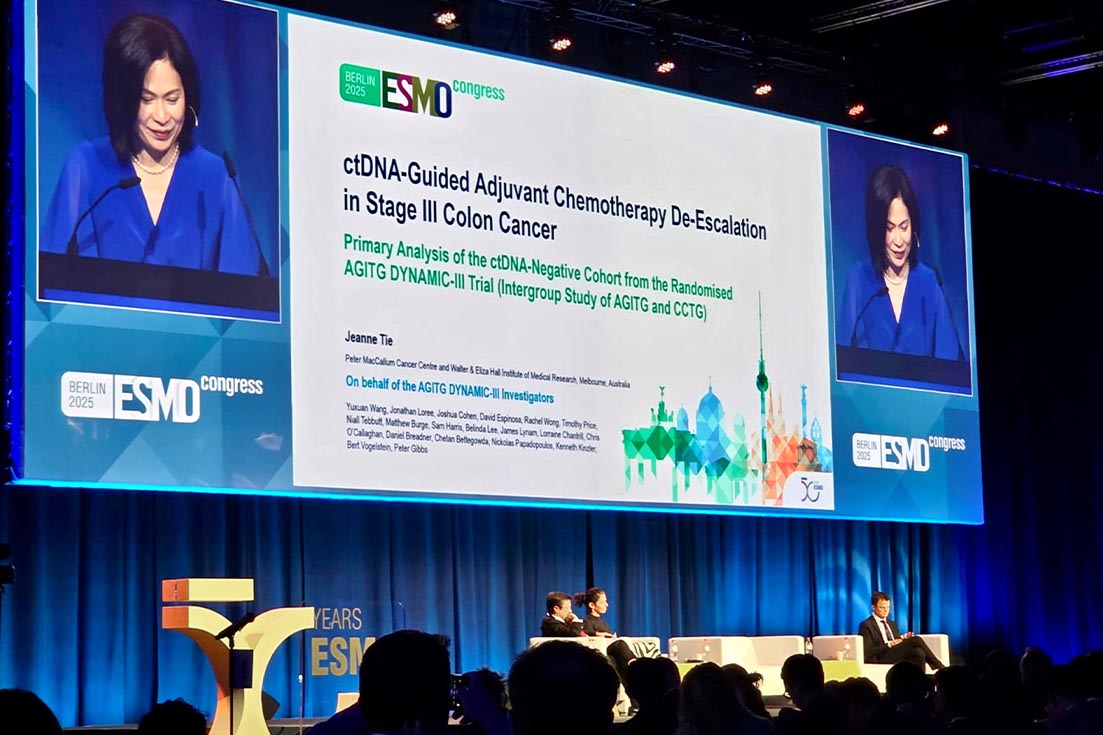
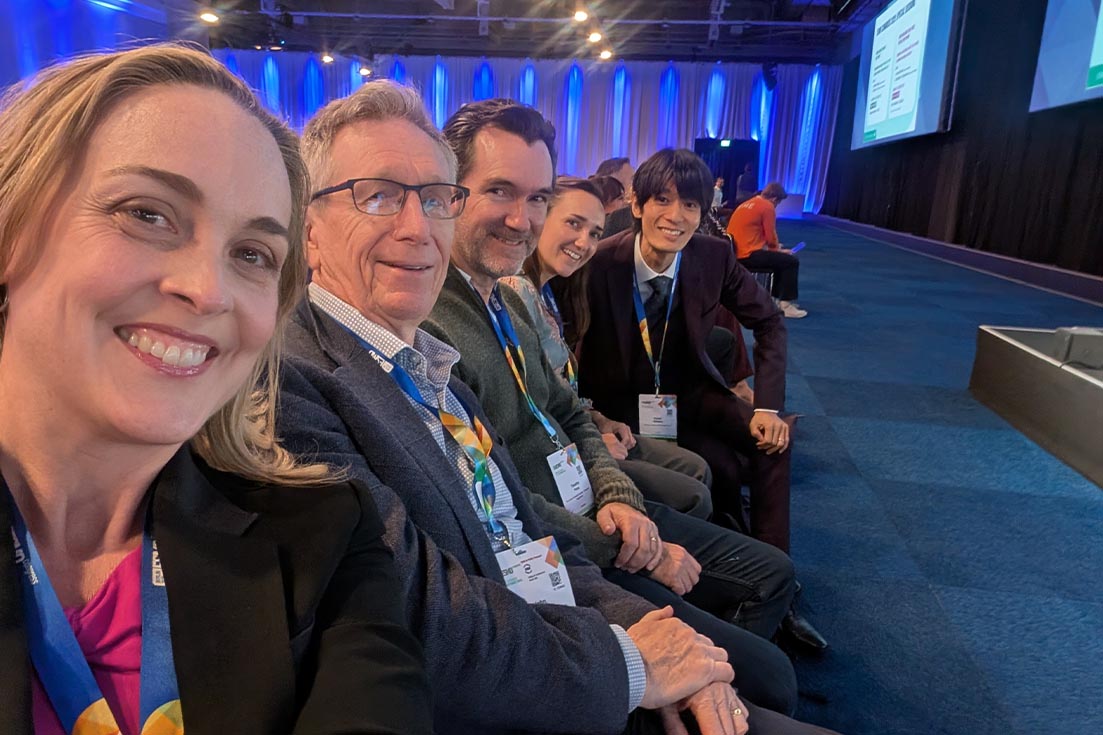
At the 2025 ESMO Congress in Berlin, results from the DYNAMIC-III ctDNA-negative cohort were presented at the Presidential Symposium and INTEGRATE IIb results were presented in a Proffered Paper session with a discussant. Abstracts were accepted for ASCEND, ASCOLT TR, Neo-POLEM, and TOPGEAR QoL.
In total, 8 trials were published including MONARCC in the Clinical Colorectal Cancer Journal, ALT-GIST in the British Journal of Cancer, DYNAMIC-III in Nature Medicine and RoLaCaRT‑1 in Surgical Endoscopy.
Announced in 2024, the practice-changing TOPGEAR findings were also presented in 2025 at the American Society of Radiation Oncology (ASTRO) Congress in San Francisco, the European Society for Radiotherapy and Oncology (ESTRO) Congress in Vienna, and the International Gastric Cancer Congress (IGCC) in Amsterdam, by Study Chair Professor Trevor Leong. The study went on to help inform a new ASTRO clinical practice guideline on the use of radiation therapy for gastric cancer in November.


Trial spotlight
DYNAMIC-III trial finds ctDNA blood test a powerful tool to guide treatment choices for people with advanced colon cancer
The DYNAMIC-III trial delivered globally significant evidence that circulating tumour DNA (ctDNA) can guide treatment decisions for people with stage III colon cancer. In collaboration with the Canadian Cancer Trials Group, the study enrolled more than 1,000 patients across Australia, Aotearoa New Zealand and Canada.
The trial tested whether circulating tumour DNA (ctDNA) – tiny fragments of cancer DNA found in the bloodstream – could guide decisions about how much chemotherapy a patient needs after surgery.
Around three-quarters of the trial participants had no ctDNA detected once their tumour was removed which meant their risk of the cancer returning was low. For these patients, doctors were able to reduce the amount of chemotherapy they received. They experienced fewer side effects and fewer hospital visits, while maintaining strong recurrence-free survival rates.
For the smaller group whose ctDNA was still detectable, the test identified them as being at higher risk of recurrence, signalling that they may benefit from more intensive treatment.
Overall, the trial showed that ctDNA testing can personalise care, helping many patients receive less chemotherapy while ensuring those who may benefit from stronger treatment are identified early.
The DYNAMIC-III results represent the strongest prospective evidence to date supporting ctDNA guided treatment for colon cancer. Presented at the Presidential Symposium of the 2025 European Society for Medical Oncology Congress and published in Nature Medicine, the findings have attracted global attention and are expected to influence future treatment guidelines.
“For many patients, the prospect of chemotherapy is daunting,” says Study Chair Professor Jeanne Tie. “Our study shows that if no tumour DNA is detected after surgery, patients may do just as well with less intensive chemotherapy – this means fewer side effects, less disruption to daily life, and more time living well after cancer.”
Our Translational Research Program
Translational research is often referred to as ‘bench to bedside’. It aims to take what is learned at the lab bench into results that can directly benefit patients. For example, tumour samples provided by patients during a clinical trial can be used by researchers to find biological characteristics of that tumour that are associated with good response to the drugs used in our trials. If the response to the drug used in the trial is not as good as expected, they can also use these samples to try and find out why.
Translational research is a feature of many of our trials – more than 90% of our ongoing trials involve the collection of patient samples for future GI cancer research.
The Program is directed by the Translational Research Committee, comprised of experts whose specialties include biological research, medical oncology, surgery and pathology, and consumer representation.
We want to sincerely thank all the participants across our trials who have donated their precious samples to help us build our biobank. These samples, given freely and possessing such personal, spiritual and cultural importance, are the foundation of our future GI cancer research. We are very grateful and privileged to be the custodians of these invaluable samples, with our research only possible due to the generosity of those patients.
From our Translational Research team,
Dr Sarah Hayes, Dr Atefeh Khakpoor and Gemma Collett
In 2025, the Translational Research (TR) Program at GI Cancer Trials made substantial progress in embedding novel and high-throughput research within our clinical trial portfolio. Strengthening the collection and use of biospecimens and clinical data is helping generate new insights into gastrointestinal (GI) cancer and supporting discoveries that move us closer to more personalised treatment approaches.
This year we received several exciting and groundbreaking translational research proposals to be embedded as sub-studies within our ongoing or completed GI cancer trials. These studies incorporate both tumour-based and blood-based biomarker discovery approaches to better understand mechanisms of treatment response, resistance, and toxicity.
Key initiatives included the implementation of blood-based proteomic profiling platforms aimed at identifying novel biomarkers and predictive signatures in patients with neuroendocrine carcinomas. The NABNEC TR sub-study, led by Associate Professor Richard Tothill, focuses on developing a proteomic platform to identify treatment response biomarkers using biospecimens collected through the NABNEC trial, which compares different chemotherapy responses in patients with gastrointestinal neuroendocrine carcinomas. This work aims to further improve diagnostic, prognostic, and personalised treatment strategies for these patients.
Another important study is the PALEO TR sub-study led by Associate Professor Fiona Day. It is a predictive biomarker discovery study using blood samples collected from patients with oesophageal cancer enrolled in the PALEO trial. PALEO is a Phase II trial evaluating the effects of combined chemoradiotherapy and immunotherapy administered at different time points during treatment. With recruitment nearing completion, the study provides a strong platform for translational research integration. The TR component aims to identify blood-based biomarkers that may predict prognosis and treatment response, supporting improved patient stratification and treatment decision-making.
In addition, six novel translational research proposals were received under the VADER TR sub-study, which aims to decipher key signalling pathways involved in cancer cell killing using both blood and tissue biospecimens collected during the VADER trial. This Phase II trial evaluates the efficacy of combining new therapeutic agents with anti-tumour drugs in patients with metastatic colorectal cancer. The studies will employ advanced technologies such as spatial biology, led by Professor John Mariadason and Dr Fiona Chionh, to identify cellular and molecular biomarkers associated with treatment outcomes and improved patient prognosis.
Finally, we were delighted to welcome two new members to our Translational Research Committee, Associate Professor Tara Roberts and Professor Joanne Bowen. Associate Professor Roberts is an expert in immuno-oncology and personalised medicine, leading a research group specialising in immune signalling pathways, cell signalling, and liquid biopsy approaches. Professor Bowen is internationally recognised for her work in the management of cancer therapy-related toxicities, with research focus on improving supportive care and treatment outcomes for patients receiving cancer therapy. Their expertise significantly strengthens the translational research program, and we are excited to work closely with them and benefit from their invaluable experience.
Collectively, the TR Program has matured into a coordinated and strategically embedded research framework that supports innovation, fosters academic and industry partnerships, and contributes to improving outcomes for patients with GI cancer.
Such achievements would not be possible without the support and contribution of our valuable committee members. We would like to extend our deep gratitude to all of our study participants for their invaluable gifts of sample donation, enabling advancements in GI cancer.

Translational Research and Grants Lead

Translational Research and Grants Lead

Translational Research Coordinator